Seoul Fashion Week – FW26 - YONGDAE Event Highlights and Key Trends Analysis:
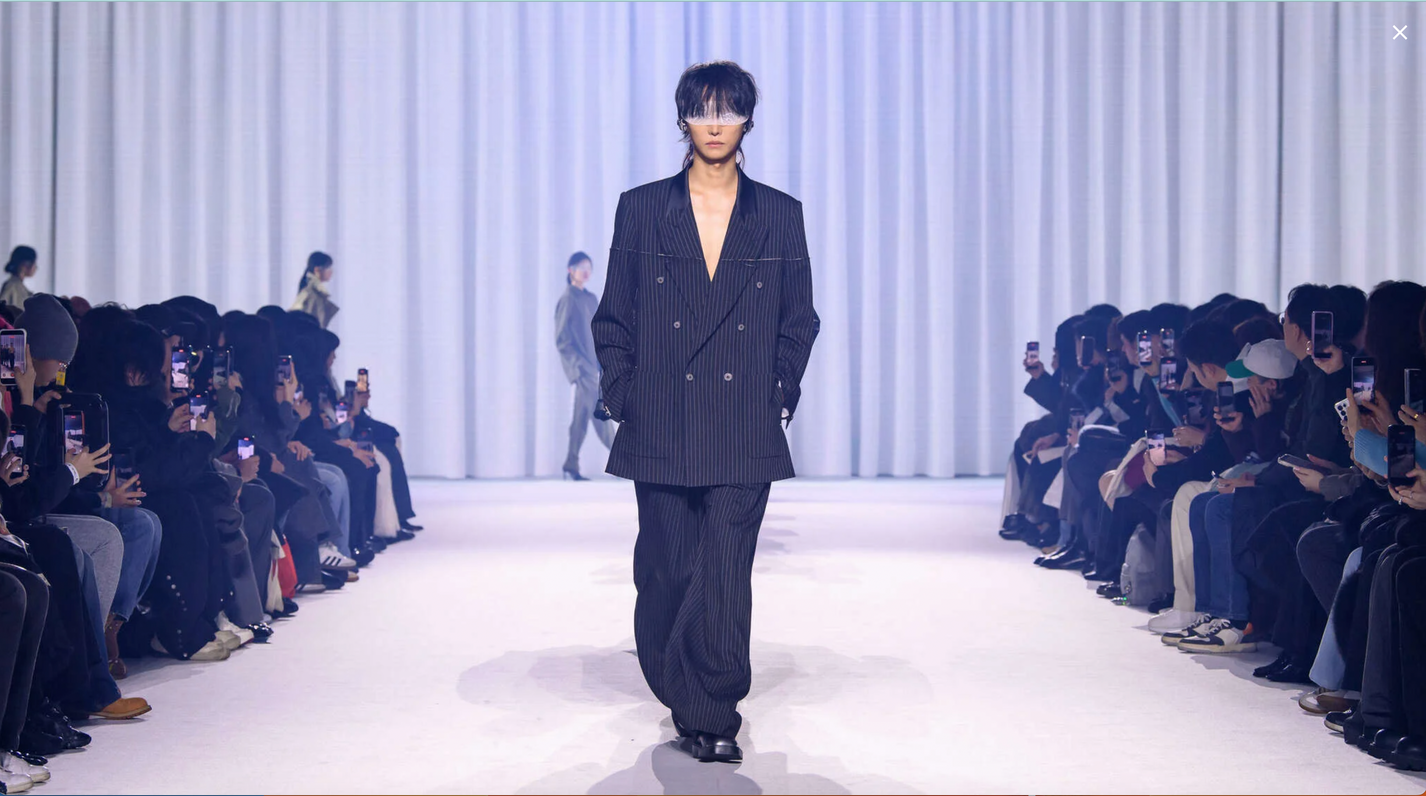
The Fall/Winter 2026 edition of Seoul Fashion Week recently concluded its six-day event to widespread global acclaim. This year marked the event’s 25th anniversary and introduced a new “one-site” concept, concentrating all runway shows, presentations, and the trade expo at the Dongdaemun Design Plaza.
The consolidated format was designed to enhance efficiency for buyers, press, and visitors alike. To broaden public engagement, the shows were streamed live via the official Seoul Fashion Week YouTube channel and broadcast on large outdoor screens at DDP’s Oullim Square.
More than a logistical adjustment, the seamless structure encouraged attendees to remain immersed within the venue. The shift signalled a clear ambition: Seoul Fashion Week is no longer simply a platform to be watched, but one to be fully experienced. In doing so, it reinforced a growing narrative — K-fashion is evolving from local success story into global strategy.
Designer Review
MÜNN: Reconstructing Military Codes
The opening show belonged to MÜNN, the menswear label led by designer Han Hyun-min, known for its precise tailoring and experimental sensibility since its debut at London Fashion Week in 2019.
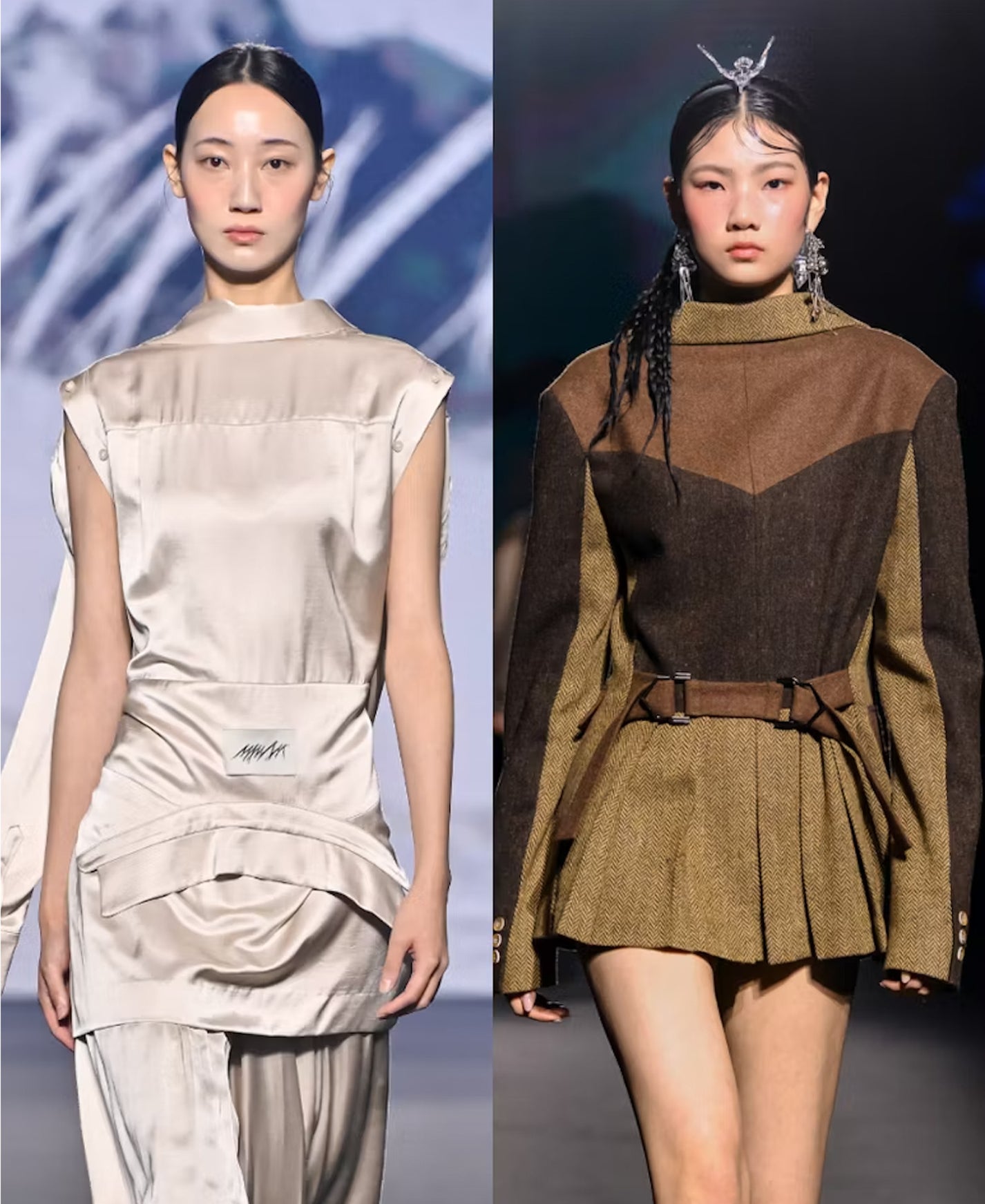
Grounded in the concept of “defamiliarisation,” the AW26 collection reinterpreted archetypal military garments through a softer, more fluid lens. Classic field jackets and structured outerwear were reconstructed into feminine bodysuits with articulated waists. Angular sleeves dissolved into rounded shoulders, while disrupted seams introduced gathering and draping, creating silhouettes that appeared wrapped rather than worn.
Material experimentation remained central. Sweaters knitted from recycled paper, dresses cut from discarded banners, and bustiers handwoven from elastic bands underscored the label’s continued exploration of unconventional and sustainable construction.
Visually, the collection leaned dark and tactile. Black, brown, and beige tones dominated, paired with oversized proportions, power shoulders, and garments swollen with twists and frills. Lace veils obscured models’ eyes, while bold silver cuffs and earrings glinted under the lights. A dress composed of yellow rubber bands, alongside a shredded vinyl bag dragged along the runway, delivered a raw, subversive finish. The result was a study in contrasts — structured yet vulnerable.
MMAM: The Subtlety of Emerging Layers
Where MÜNN examined structure, MMAM, designed by Park Hyun, turned inward. Titled Emerging Layers, the collection explored fleeting afterimages of the unconscious — emotions and memories surfacing through movement.
At first glance, the garments appeared restrained and minimal. Yet as models moved, linings and inner fabrics slipped through cut-outs and openings, quietly revealing hidden dimensions.
A palette of beige, ivory, khaki, grey, and brown anchored the collection. Unbalanced trench coats, softly rippled textures, tucked volumes, and satin two-pieces suggested comfort without sacrificing refinement. Pyjama-like materials styled with tailored coats created looks that transitioned effortlessly from private to public space. The effect was understated yet emotionally resonant.
Themes Across the Runway
Across the week, Seoul’s designers demonstrated that experimentation and wearability are no longer opposing forces. Instead, they coexist within a shared design language.
Collections frequently revolved around contrasts — heritage and futurism, structure and fluidity, nostalgia and innovation. Material research, deconstruction, and the modernisation of classic design values emerged as recurring motifs.
Designers such as KWAK HYUNJOO COLLECTION reinterpreted hanbok layering and jogakbo patchwork traditions into contemporary silhouettes. ULKIN, through its “Desire Path” philosophy, fused sustainability with individual expression.
Material and technological innovation proved especially prominent. Labels including JULYCOLUMN and AMOMENTO balanced archival references with modern minimalism, while BLR’s exploration of aged fabrics and denim craftsmanship transformed wabi-sabi aesthetics into something approaching meditation.
Identity and cultural storytelling remained central. YUGADANG drew from Korean mythology, presenting a performative universe underscored by gugak melodies. SEOKWOON YOON’s “Future Classic” tailoring examined timelessness through contemporary sharpness. Meanwhile, GREEDILOUS, ADLIELOS, and DAILYMIRROR delivered visually assertive interpretations of resilience and ambition.
Towards the finale, introspection deepened. JOHN&3:21 explored self-identity through craftsmanship, while CARUSO revisited military tailoring with a modern sensibility. The closing narrative suggested a broader shift — fashion as an exploration of inner meaning rather than outward spectacle.
Key Trends from AW26
Several defining trends emerged throughout the week:
Fur-Dominated Necklines
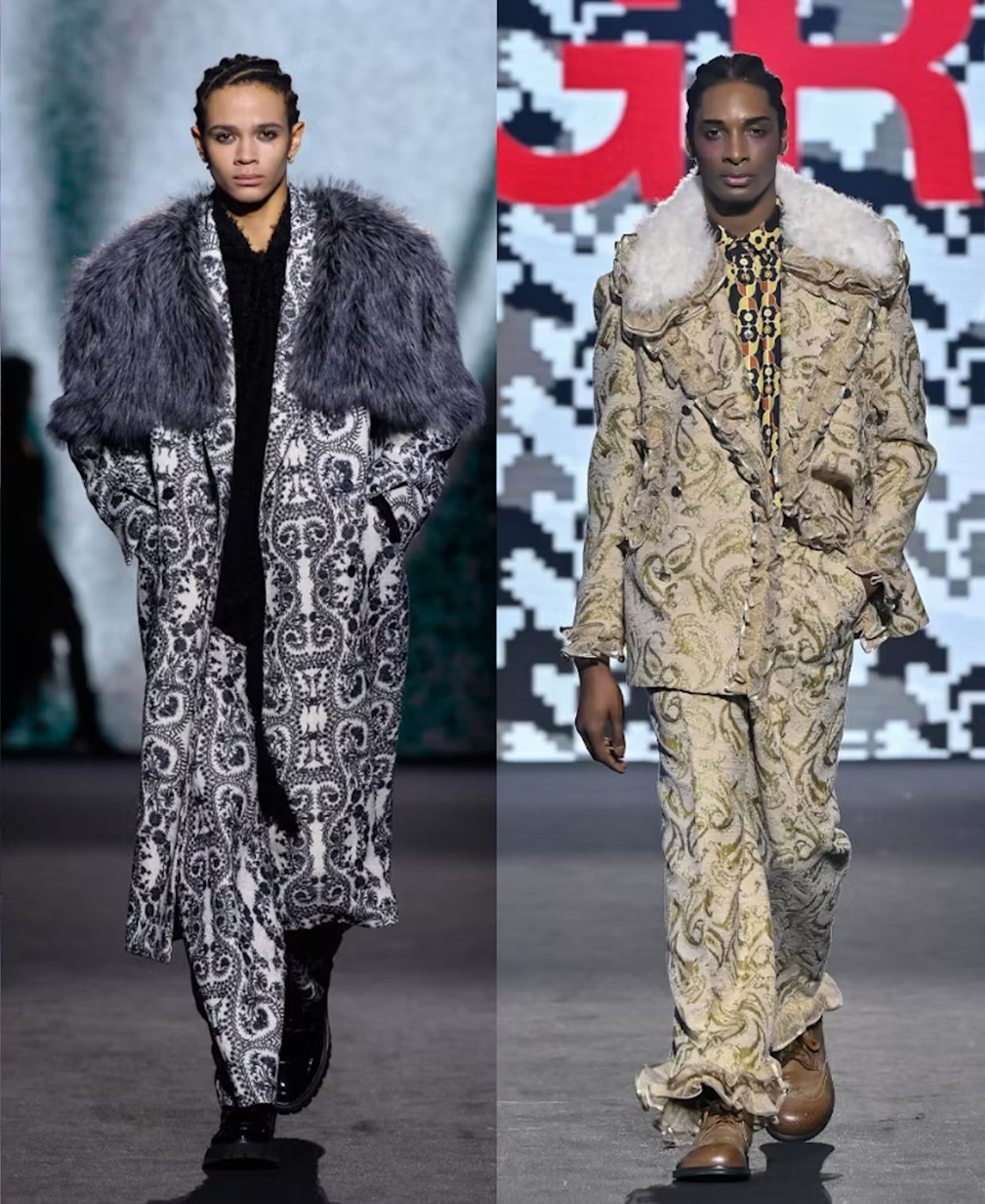
Dramatic fur collars framed tailored outerwear, establishing themselves as a signature element of Seoul’s AW26 season.
Expressive Prints
Floral and paisley motifs frequently appeared on coordinated sets, adding visual richness to structured silhouettes.
Transformative Sleeves
Slit sleeves created cape-like forms, blurring the line between tailoring and outerwear.
Reimagined Tweed
From classic houndstooth to linear variations, tweed appeared both traditional and oversized, often evoking yet modernising familiar luxury codes.
Inverted Tailoring
Women’s suiting embraced inversion and exposure. Garments were worn inside-out or back-to-front, revealing linings, labels, and unconventional necklines.
Toggle Closures
Typically associated with duffel coats, toggle fastenings appeared across diverse outerwear categories, sometimes functioning as bold statement details.
Deterioration as Design
Distressed knitwear — laddered wool, fragmented structures, and near-disintegrating forms — elevated decay into aesthetic expression.
Oversized Bow Detailing
Minimal garments gained dramatic flair through exaggerated bow accents at cuffs and necklines.
A Global Chapter for K-Fashion
At Seoul Fashion Week, the next chapter of K-fashion’s global narrative was unmistakably visible. The event brought together Korean designers, international buyers, and editors from across the world, highlighting Seoul’s growing influence within the global fashion ecosystem.
The prevailing sentiment was clear: K-fashion is no longer an emerging phenomenon. It is positioning itself as a defining force in Korea’s expanding creative influence.